Our Destination

Immerse yourself in the history of ancient cities, discover mysterious temples, breathtaking nature reserves, and incredible national parks.
Home / Destination

Top-rated Destinations

for your next Adventure.

ANURADHAPURA

Anuradhapura is a historic city located in the Central Province of Sri Lanka, known for its rich history and culture. It is the first historic capital of Sri Lanka, serving in this role for nearly 1,500 years, from 380 BC until its fall in the early 11th century.

Anuradhapura is currently the capital of the Central Province, a very important center of Buddhism – a historic holy city, where the Bodhi tree, under which Buddha traditionally attained enlightenment, still grows today. It is a special place of pilgrimage, where the faithful meditate and pray in contemplation. Anuradhapura is famous for its numerous temples and stupas, including Jaya Sri Maha Bodhi (the oldest documented tree in the world). Among the ruins of this ancient city, several Buddhist temples, palaces, stupas or dagobas, the Abhayagiri monastery, and a house of prayer have been preserved. Anuradhapura has been inscribed on the UNESCO World Cultural and Natural Heritage List.

POLONNARUWA

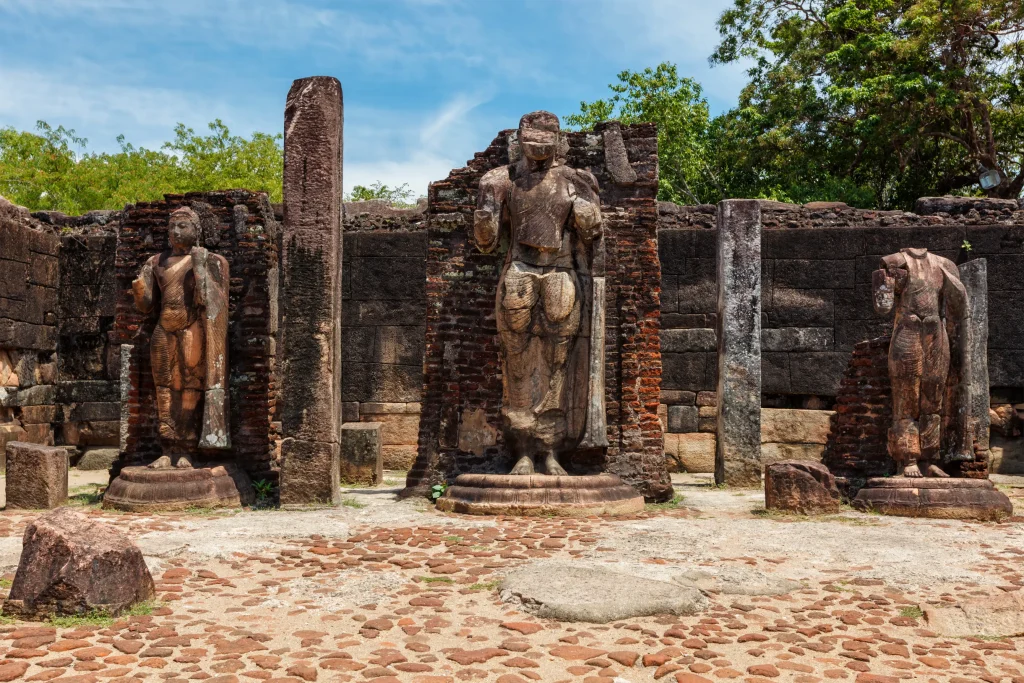
After the fall of Anuradhapura, the capital of the Kingdom of Sri Lanka, the city was abandoned and largely forgotten, its ruins overgrown by jungle. Polonnaruwa became the new capital, serving as the capital of Ceylon from the 11th to the 13th century. Polonnaruwa, the second oldest of all the kingdoms of Sri Lanka, was originally founded as a military outpost by the Sinhalese kingdom.

Polonnaruwa is home to the well-preserved ruins of an ancient city, listed as a World Heritage Site. The ruins are located in a vast area that stretches about 4 km from north to south. Among the numerous ruins are the Citadel, the Quadrangle Temple, Gal Vihara (stone temple) and Lanktilaka, Gal Pota (stone book), Menik and Rankoth vihara temples, Alahena Pirivena monastery, Kiri Vehera stupa, and Tivanka Buddhist temple-image house are must-see attractions.

To the west of the ancient city is the artificial lake Parakrama Samudra, or Parkramabahu Sea, which was created during the reign of King Parakramabahu in the 13th century. It was revitalized in the 1950s.

SIGIRIYA

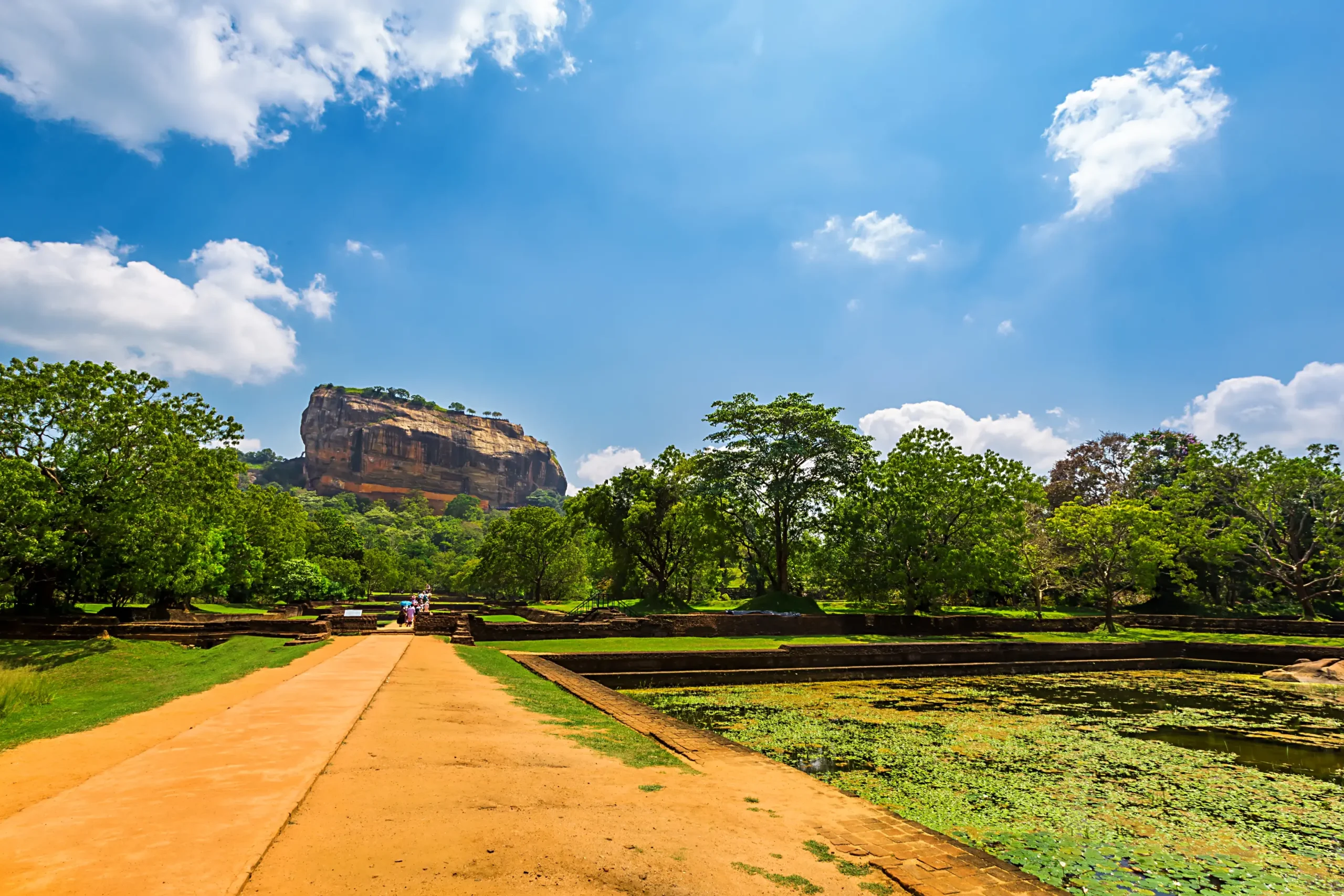
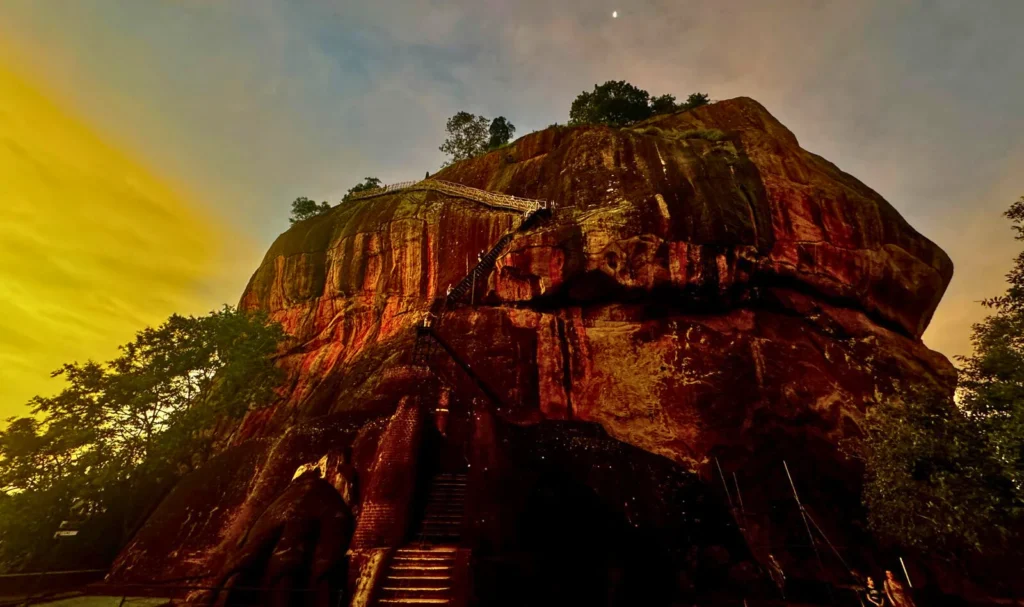
Sigiriya, also known as “Lion Rock,” is an awe-inspiring ancient fortress and UNESCO World Heritage Site located in central Sri Lanka. This majestic rock formation, measuring over 200 meters in height, was once the site of a vast palace and urban complex built in the 5th century AD by King Kashyapa.

He decorated the walls of Lion Rock with frescoes and built an impressive palace right on top of the rock column, accessible only through the mouth of a huge carved lion. The Sigiriya frescoes, reflecting Oriental art, and the Sigiriya graffiti carved into the rock walls have made this mountain a world-famous site. It is sometimes called the eighth wonder of the world.

KANDY

Kandy, known as the last capital of the kings of Sri Lanka, is a city steeped in history, culture, and spirituality located in the heart of Sri Lanka. Surrounded by hills and lush tea plantations, the city offers a unique blend of colonial architecture, Buddhist traditions, and picturesque views.

Forest Reserve SINHARAJA

Sinharaja, located in southwestern Sri Lanka, is the country’s last remaining area of primary tropical forest. Over 60% of the trees are endemic, and many are considered rare. There are many endemic species of wildlife, especially birds, but the reserve is also home to over 50% of Sri Lanka’s endemic mammal and butterfly species, as well as many species of insects, reptiles, and rare amphibians.

This evergreen rainforest is one of the few pristine rainforests that remain today. Humid, mysterious, and teeming with life, the Sinharaja Reserve is a stunning and biologically diverse region of Sri Lanka. The Sinharaja Forest Reserve is a national park that was inscribed on the UNESCO World Heritage List in 1988.

MINNERIYA National Park

Located in the heart of Sri Lanka’s Cultural Triangle, Minneriya National Park entices visitors with its breathtaking landscapes and rich biodiversity. Famous for its spectacular annual gathering of elephants, known as “The Gathering,” the park is a paradise for wildlife and nature lovers.

Spanning over 8,800 hectares, Minneriya is dominated by the picturesque Minneriya Reservoir, a 3rd-century AD water reservoir built by King Mahasena. This ancient reservoir not only sustains the park’s diverse ecosystems, but also serves as an important watering hole during the dry season, attracting hundreds of Asian elephants along with numerous species of birds, amphibians, and reptiles.

National Park YALA

Located in the southeastern dry zone of Sri Lanka, it covers an area of 979 square kilometers. Yala Park, with its diverse ecosystems and three lagoons, is a must-visit destination for nature lovers, wildlife photographers, and eco-tourists seeking an immersive encounter with the island’s extraordinary biodiversity.

National Park WILPATTU

Located between the North Central, Northern, and Eastern provinces, Wilpattu is one of the most beautiful parks in Sri Lanka. What makes Wilpattu special is that you can see many ecosystems here, such as dry zone forests, coastal mangroves, cliffs, scrubby wetlands, grasslands, and sand dunes. Spanning an area of approximately 131,693 acres, it is a paradise for animals such as deer, elephants, pigs, leopards, and bears.

National Park PIGEON ISLAND

Pigeon Island National Park is a small, picturesque island off the coast of Trincomalee, famous for its diverse marine life and stunning coral reefs. Accessible by boat, the island offers excellent snorkeling and scuba diving opportunities, allowing visitors to see a vibrant underwater ecosystem full of colorful fish, sea turtles, and other marine creatures.

There are many endemic species of animals here, especially birds, but the reserve is also home to over 50% of Sri Lanka’s endemic mammal and butterfly species, as well as many species of insects, reptiles, and rare amphibians.

TEMPLE OF THE TOOTH OF BUDDHA

The Temple of the Tooth Relic, also known as Sri Dalada Maligawa, is the most important Buddhist temple in Sri Lanka, located in Kandy. It houses the relic of Buddha’s tooth (a symbol of spiritual power and sovereignty of the country), which attracts pilgrims and tourists from all over the world.

MIHINTALE

Mihintale is a sacred mountain site located just outside Anuradhapura, considered the birthplace of Buddhism in Sri Lanka. It is famous for its impressive 1,840 stone steps, which lead visitors up to various ancient Buddhist monuments and shrines. As visitors climb the stairs, they are greeted with stunning views of the surrounding landscape. Visiting Mihintale offers a deeply spiritual and cultural experience for those who wish to connect with Sri Lanka’s profound Buddhist heritage.

DAMBULLA

The Dambulla Cave Temple, a UNESCO World Heritage Site, is one of the most impressive and best-preserved cave complexes in Sri Lanka. This ancient Buddhist sanctuary, dating back to the 1st century BC, comprises a series of five interconnected caves decorated with stunning wall paintings, intricate carvings, and over 150 Buddha statues. The wall paintings cover an area of 2,100 square meters.

RUWANWELISAYA

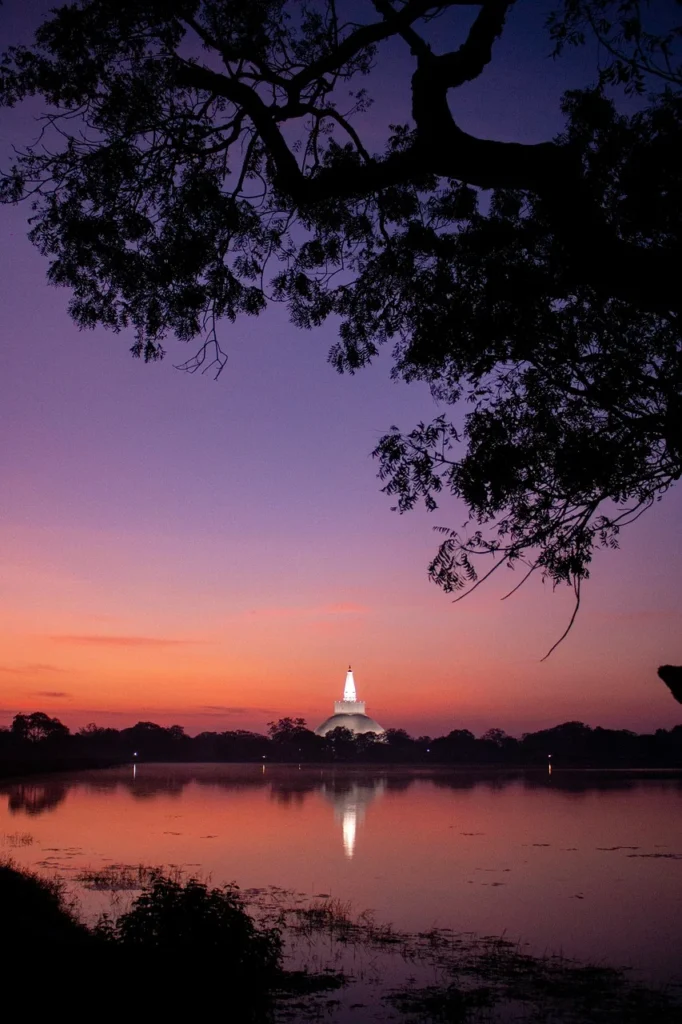
This ancient stupa, dating back to the 2nd century BC, is considered one of the largest and most important Buddhist monuments in the world. It is revered for its enormous size, architectural grandeur, and deep spiritual significance in the Buddhist tradition. Visitors can admire the impressive domed structure of the stupa, decorated with intricate carvings and decorations that showcase the extraordinary craftsmanship of the past.

JETHAVANARAMAYA

It was the tallest stupa (122 meters) in the world and the third tallest structure in the world (right after the two great pyramids: the Great Pyramid of Giza and the Pyramid of Khafre), included on the UNESCO World Heritage List. It was built by King Mahasena of Anuradhapura (273–301 BC).

MOONSTONE, A Masterpiece of Sculpture.

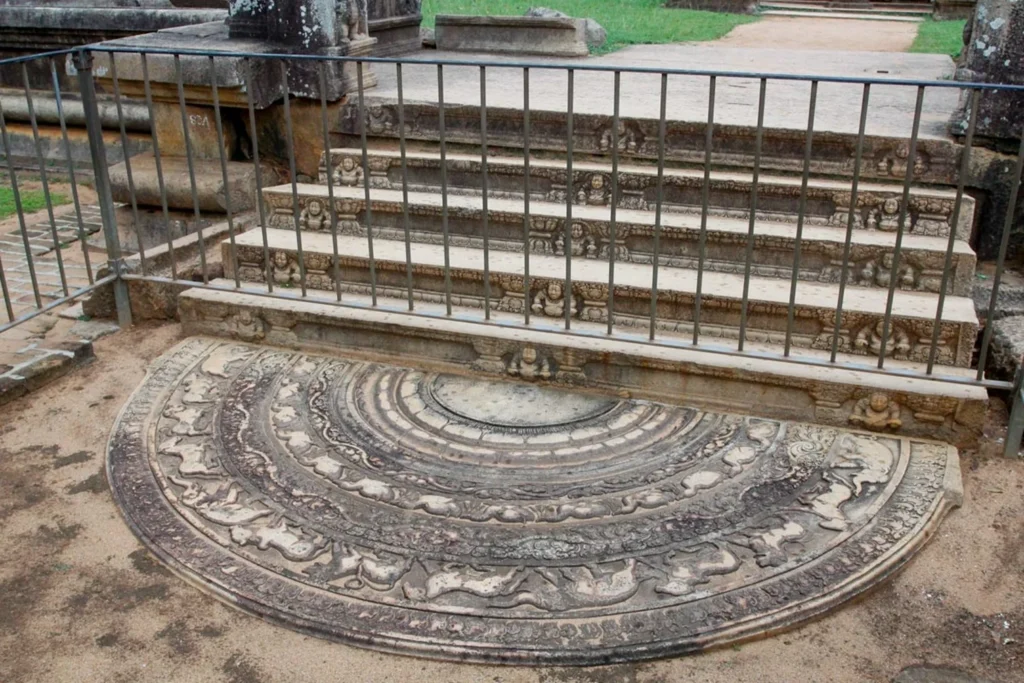
Moonstone, which serves as a doormat in ancient Sri Lankan buildings, is a work of art. The first moonstones were created in the medieval capital, Anuradhapura. The stone carving on the semicircular doormat has been interpreted in several ways by scholars. Among them, the interpretation of Prof. Senerata Paranavitana is particularly noteworthy.

The outer motif depicts a world on fire, symbolizing desire. The next circle of animals represents the four stages of birth, sickness, aging, and death. Transcending these sorrows on the path to liberation, a vine and leaves appear, symbolizing the life force. When you transcend this desire, you will reach the swan, representing purification. And the lotus in the center represents Nirvana, the state of ultimate liberation from suffering.

GAL VIHARA

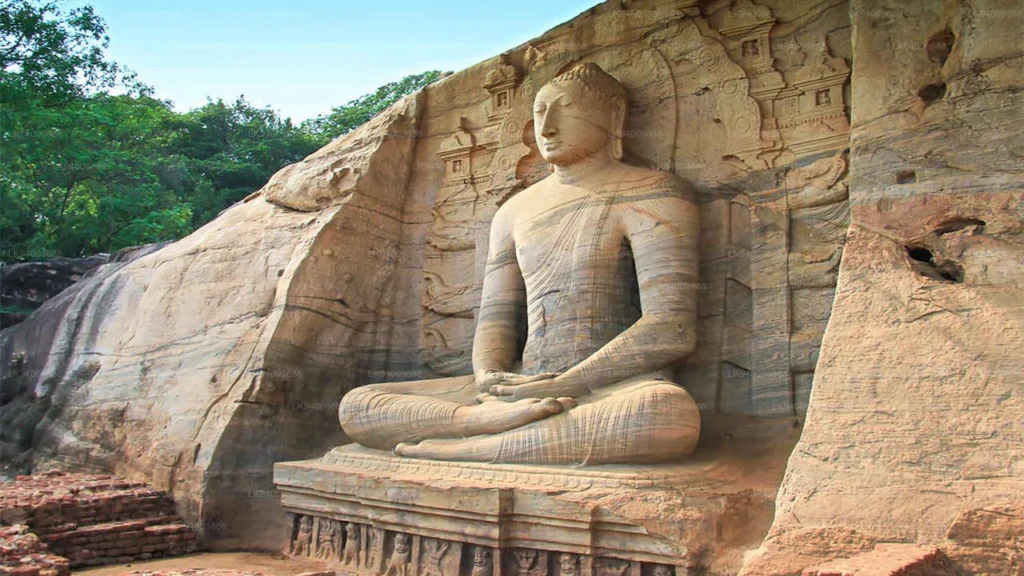
Gal Vihara is an extraordinary group of four Buddha statues carved directly into the rock at the Polonnaruwa Archaeological Site. These intricately crafted sculptures, dating back to the 12th century, are considered one of the finest examples of Sri Lankan rock carving. Visitors can admire the serene expressions and intricate craftsmanship of the Buddhas, which include reclining, seated, and standing figures.

About Sri Lanka

History at a Glance

Sri Lanka boasts a rich history, with civilization dating back to around the 6th century BC. Initially shaped by Indo-Aryan migrations and the introduction of Buddhism, the island witnessed the rise of kingdoms such as Anuradhapura, influenced by Indian and Southeast Asian cultures. European colonization began with the Portuguese in the 16th century, followed by the Dutch and finally the British, who unified the island under the name Ceylon. It gained independence in 1948 and the name Sri Lanka in 1972.

Sri Lanka is known for its rich culture, deep-rooted history, and numerous tourist attractions, attracting travelers from all corners of the world.

People

The main ethnic groups in Sri Lanka are the Tamils and the Sinhalese, the latter constituting the majority of the population. In addition to them, the island is also inhabited by Moors, Burghers (an ethnic group descended from European colonizers) and Veddas (the indigenous people of Sri Lanka), as well as smaller groups such as Malays and Gypsies.

People living in Sri Lanka are called Sri Lankans. The term “Sri Lankan” encompasses all ethnic groups and nationalities in the country. Meanwhile, “Sinhalese” is a specific ethnic group that speaks the Sinhalese language and mainly practices Buddhism, so it is not a correct general term for all inhabitants.

Religion and Languages

The dominant religion in Sri Lanka is Buddhism, which is practiced by about 70% of the population. Apart from that, Hinduism, Islam, and Christianity also play a significant role on the island. The Constitution of Sri Lanka stipulates that Sinhala and Tamil are the two official languages, with English used as an auxiliary language in administration. Sinhala, the main official language of Sri Lanka, belongs to the Indo-Aryan languages (Indo-Iranian group, Indo-European family). It is currently spoken by approximately 17 million people.

Climate

The central and northern parts of the country have a tropical monsoon climate, while the rest of the country has a humid equatorial monsoon climate. The average annual temperature in Sri Lanka is constant, ranging from 25 to 33 degrees Celsius.

The Art of Music and Dance

The arts and music of Sri Lanka are rich and diverse, reflecting the island’s long history and cultural influences. Traditional art includes cave and temple murals, sacred architecture, stone carvings, and unique crafts such as masks, textiles, coconut fiber products, batik, block lace (Beeralu), ceramics, wood carving, precious metalwork, and lacquerware. Music, equally rich, draws on folk rituals, Buddhist and Hindu traditions, as well as colonial and Indian influences. There are three main styles of classical Sri Lankan dance: Kandyan dances from the Hill Country, known as Uda Rata Natum, lowland dances from the southern plains, known as Pahatha Rata Natum, and Sabaragamuwa dances or Sabaragamuwa Natum. Dance, especially Kandyan dance, is an important cultural element, combining ritual and artistic elements. Dances in the Low Country region are ritualistic in nature, performed to appease evil spirits causing disease, hence it is called the “devil’s dance.” Dancers wear masks depicting birds, demons, reptiles, etc. There are 18 main dances associated with the Low-country dance style.
Kitchen

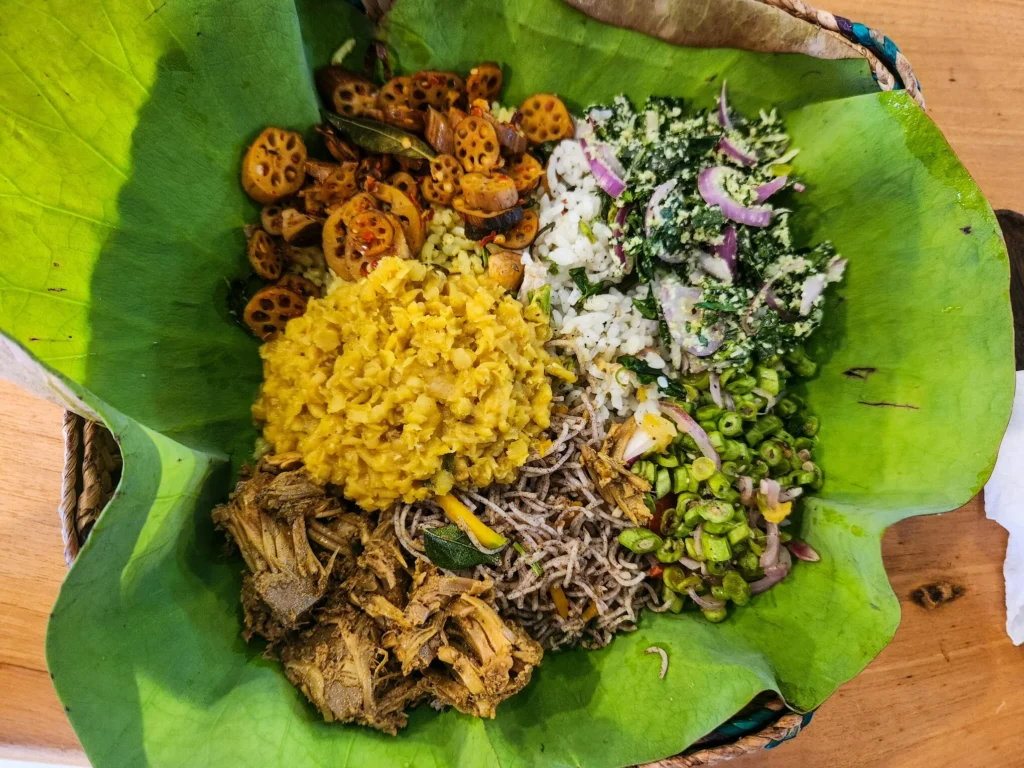
Sri Lankan cuisine, known for its rich flavors and aromas, is based primarily on rice and curry. Typical dishes include rice and curry, hoppers (crispy pancakes made from rice flour and coconut milk), string hoppers (thin, stringy rice cakes) , kottu roti (finely chopped bread fried with vegetables, eggs, and meat), and a variety of desserts, such as watalappam (a traditional dessert made from coconut milk, eggs, and honey). The island is also famous for Ceylon tea and exotic fruits.